
Safeguarding Children Policy 2026 2027
Policy Owner: Designated Safeguarding Lead
Policy Approval Date: Oct 2026
Policy Review Cycle: Annually
Policy Next Review Date: Oct 2027
SAFEGUARDING CHILDREN AND YOUNG PEOPLE (INCLUDING CHILD PROTECTION PROCEDURE)
| Role | Name | |
|---|---|---|
|
Chair of Governors |
Julie Dyer |
|
|
Safeguarding Governor |
Julie Dyer |
|
|
Principal |
Sheila Talwar |
|
|
Designated Safeguarding Lead (DSL) |
Lisa Taylor |
|
|
Deputy DSL |
Jo Pearch |
|
|
Deputy DSL |
Vicky Dangerfield |
|
|
Designated Teacher for Looked After Children |
Louise Harper |
|
|
Prevent Lead |
Sheila Talwar |
|
|
Lead Nurse (Allergy Lead) / Senior Care Manager |
Jo Pearch |
|
|
Confidential safeguarding mailbox: [email protected] |
||
|
The key safeguarding responsibilities within each of the roles above are set out in Keeping Children Safe in Education (2026) |
||
DEFINITIONS
Working together to safeguard children defines safeguarding and promoting the welfare of children as:
• Providing help and support to meet the needs of children as soon as problems emerge
• Protecting children from maltreatment, whether that is within or outside the home, including online
• Preventing the impairment of children’s mental and physical health or development
• Ensuring that children grow up in circumstances consistent with the provision of safe and effective care,
• Taking action to enable all children to have the best outcomes
Child protection is part of safeguarding and promoting the welfare of children. It is defined in Working Together to Safeguard Children and refers to the action taken to protect children who are suffering, or are likely to suffer, significant harm, including harm that occurs within or outside the home, in foster or residential care, and online. While staff are not responsible for determining whether abuse has occurred, they have a duty to recognise concerns, act promptly, and report them in line with this policy. The welfare of the child is paramount.
The Designated Safeguarding Leads (DSLs) are responsible for leading and coordinating child protection arrangements within St Rose’s, providing advice and support to staff, ensuring safeguarding procedures are understood and followed, making referrals where appropriate, liaising with external agencies, and overseeing safeguarding and child protection training.
INTRODUCTION
Safeguarding and promoting the welfare of children is everyone’s responsibility. ‘Children’ includes everyone under the age of 18. Everyone who comes into contact with children and their families has a role to play. In order to fulfil this responsibility effectively, all practitioners should make sure their approach is child centred. This means that they should consider, at all times, what is in the best interests of the child
This policy has been updated in line with the revised publication of Keeping Children Safe in Education (DfE, 2026)
As well as information from:
• Working together to safeguard children (HM Government, 2026)
• Prevent duty guidance: for England and Wales (accessible) – GOV.UK
• Education Act 2002 Section 157 (Independent schools incl Academies and CTC’s)
• The Education (Independent School Standards) (England) Regulations 2003
• The Safeguarding Vulnerable Groups Act 2006
• Teachers’ Standards (Guidance for school leaders, school staff and governing bodies)
• Working Together to Safeguard Children
• Keeping Children Safe in Education
• Information Sharing Duty 2026
• What to do if you’re worried a child is being abused
• Filtering and monitoring standards in schools and colleges (DfE)
• Use of reasonable force and other restrictive interventions guidance
• Early years foundation stage (EYFS) statutory framework – GOV.UK (www.gov.uk)
• Guidance from the Gloucestershire’s Safeguarding Children Partnership: Gloucestershire Safeguarding Children Partnership Multi Agency Safeguarding Procedure Manual | Gloucestershire Safeguarding Children’s Partnership
This policy should be read in conjunction with the following policies and documents:
• Admissions policy
• Code Of Conduct Policy
• Compliments and Complaints Policy
• Guidance For Safer Working Practice for Adults Who Work with Children and Young People in Education Settings (Safer Recruitment Consortium, 2022).
• ICT And Internet Acceptable Use Policy
• National Minimum Standards for Residential Special Schools DFE, 2022
• Online Safety Policy
• Positive Behaviour Support Policy
• Protocol on Partnership Working When Children and Young People Run Away and Go Missing from Home or Care.
• Safeguarding Adults with Care and Support Needs Policy
• Safer Recruitment Policy and Procedures
• Special Educational Needs and Disability Policy and Information Report.
• Statutory Framework for the Early Years Foundation Stage, DfE, 2026
At St Roses in addition to our policies and procedures:
• All DSLs are members of the school leadership team and have job descriptions for this role in line with GSCP guidance. The DSL or DDSL’s will always be available to discuss safeguarding concerns
• DSL’s meet regularly to discuss any issues arising.
• Termly safeguarding practice development meetings take place with the whole safeguarding team
• All staff have safeguarding induction and training
• Safeguarding is an agenda item on all leadership meetings, Governing body meetings, as well as individual team meetings.
• Our safeguarding policies and procedures are reviewed annually
• Our policies and procedures are reviewed by Gloucestershire Safeguarding Children’s’ Partnership
• Student guide to safeguarding (pictorial)
MISSION STATEMENT
Working together to flourish in education and life, as children of God with unique individual worth.
AIMS OF THIS POLICY
At St Rose’s, we are committed to safeguarding and promoting the welfare of children and young people. We expect all staff, governors, trustees, volunteers and visitors to share this commitment and uphold our inclusive, anti-discriminatory culture, where all forms of racism and discrimination are recognised, challenged and addressed.
This policy sets out the school’s safeguarding and child protection arrangements and the responsibilities of all members of the school community. Safeguarding is everybody’s responsibility. All concerns about a child’s welfare must be reported promptly to the Designated Safeguarding Lead (DSL) or safeguarding team, and staff must remain vigilant, professionally curious and aware that children may not always be able to disclose abuse, neglect or exploitation.
St Rose’s works in partnership with students, families and external agencies to promote children’s safety and wellbeing. All staff and volunteers are subject to appropriate safer recruitment and DBS checks and must follow the procedures of the Gloucestershire Safeguarding Children Partnership (GSCP).
This policy aims to:
• Promote a safe, inclusive and safeguarding-focused culture.
• Clarify safeguarding roles, responsibilities and expectations.
• Support the early identification of need and timely intervention.
• Respond effectively to safeguarding and child protection concerns, including wider safeguarding risks.
• Ensure effective partnership working with families and external agencies.
• Meet the school’s statutory duty to cooperate with and implement local safeguarding arrangements
PROFESSIONAL EXPECTATIONS ROLES AND RESPONSIBILITIES
ROLE OF THE GOVERNING BODY
The Governing Body and Trustees will fulfil their safeguarding responsibilities in accordance with Keeping Children Safe in Education (KCSIE) 2026, Part Two, ensuring effective safeguarding arrangements are in place across the school. Governors and trustees will receive safeguarding and child protection training at induction and regular updates thereafter to enable effective strategic challenge and oversight of safeguarding practice. The designated safeguarding governor will meet regularly with the Principal and Designated Safeguarding Lead (DSL) to monitor safeguarding arrangements, including online safety and filtering and monitoring systems.
The Governing Body will ensure that:
• safeguarding remains a standing agenda item and is reviewed regularly;
• the Safeguarding and Child Protection Policy is reviewed annually and updated as required;
• safer recruitment and all required pre-employment checks are undertaken in line with KCSIE 2026;
• the Single Central Record (SCR) is maintained and monitored;
• effective procedures are in place for managing allegations and low-level concerns about adults working with children;
• children are taught about safeguarding, including online safety;
• systems enable children to share concerns, seek support and have their views heard;
• effective arrangements are in place to prevent, identify and respond to child-on-child abuse, mental health concerns and other safeguarding risks;
• a designated teacher is appointed to promote the educational achievement of children in care and previously looked-after children, where applicable;
• annual safeguarding and filtering and monitoring assurance reports are scrutinised; and
• actions arising from audits, reviews and assurance processes are addressed promptly.
The designated safeguarding governor will support completion of Gloucestershire Safeguarding Children Partnership (GSCP) assurance processes and provide appropriate challenge to promote continuous improvement, including routine audits of personnel files and the SCR
ROLE OF THE DESIGNATED SAFEGUARDING LEAD (DSL) AND DEPUTIES (DDSL)
The Governing Body will appoint a suitably qualified member of the senior leadership team as the Designated Safeguarding Lead (DSL), with lead responsibility for safeguarding and child protection, including online safety and oversight of filtering and monitoring systems. The DSL’s responsibilities, as set out in KCSIE 2026 Annex B, will be reflected in their job description. St Rose’s will ensure the DSL has the status, authority, time, funding, training, resources and support necessary to fulfil the role effectively. Safeguarding cover will be available at all times through trained DDSLs, a shared safeguarding inbox and agreed communication systems. Contact details for the DSL, DDSLs and confidential safeguarding email are available on the school website, safeguarding noticeboards, staff areas and induction materials.
The DSL, supported by the DDSLs, will:
• lead safeguarding and child protection practice across the school;
• ensure concerns are responded to appropriately and without delay;
• maintain accurate, secure and confidential safeguarding records;
• identify children requiring early help, family help, mental health support, social care intervention or protection from abuse, neglect, exploitation, radicalisation and other safeguarding risks; (APPENDIX 2)
• make referrals and work effectively with safeguarding partners;
• support staff in recognising, recording and responding to concerns;
• promote educational outcomes by understanding safeguarding issues affecting students and sharing relevant information on a need-to-know basis;
• liaise with external agencies, including Children’s Social Care and the LADO;
• coordinate safeguarding training and updates;
• ensure child protection files are transferred securely and promptly;
• work with the filtering and monitoring lead to review systems and report to governors as required;
• oversee safeguarding arrangements for off-site and out-of-hours activities; and
• monitor and audit safeguarding practice and procedure
ROLE OF ALL STAFF (INCLUDING STAFF INDUCTION AND SAFEGUARDING TRAINING)
The Governing Body and Trustees will ensure that all staff, volunteers, governors, trustees, contractors and regular visitors receive safeguarding and child protection induction appropriate to their role. This includes local safeguarding arrangements, the roles of the DSL and DDSLs, reporting procedures, online safety, filtering and monitoring, staff conduct expectations, and relevant safeguarding policies.
As part of induction, staff must read and understand this policy, the Staff Code of Conduct, Behaviour Policy, procedures for children missing or absent from education, and Part One of KCSIE 2026, together with any additional sections identified by the Principal or DSL. Staff must understand their responsibilities for identifying, responding to and reporting concerns relating to abuse, neglect, exploitation, child-on-child abuse, online safety, mental health, radicalisation, serious violence, discrimination and other safeguarding risks. All concerns must be recorded and reported promptly in line with school procedures.
All staff and volunteers will:
• receive safeguarding and child protection training, including online safety, and regular updates at least annually;
• complete role-specific safeguarding training, including Prevent Duty and FGM awareness;
• receive training on professional conduct, boundaries, low-level concerns, whistleblowing and reporting procedures; and
• understand their responsibilities for online safety, filtering and monitoring, and the whole-school safeguarding approach.
The DSL and DDSLs will:
• undertake advanced safeguarding and child protection training, including online safety;
• regularly refresh their knowledge and skills, particularly following changes to guidance or local procedures;
• maintain up-to-date safeguarding knowledge through training, networks and safeguarding updates; and
• be trained to the same standard to ensure effective safeguarding cover.
The school will ensure that at least one member of every recruitment panel has safer recruitment training; governors and trustees receive safeguarding training and updates; senior leaders understand safeguarding responsibilities across attendance, behaviour, SEND, inclusion and exclusion; the Designated Teacher for Children in Care and Senior Mental Health Lead receive appropriate training; safeguarding training reflects KCSIE Annex B and online safety guidance; and staff required to use reasonable force or restrictive interventions receive appropriate training. Records of all safeguarding induction, training and updates will be maintained.
SAFER RECRUITMENT
St Rose’s is committed to safer recruitment and follows KCSIE 2026 and relevant legislation to deter, identify and reject unsuitable applicants, with safeguarding and promoting the welfare of children at the centre of all recruitment activity. Recruitment materials clearly state the school’s safeguarding commitment, the safeguarding responsibilities of the role, and the requirement for appropriate pre-employment checks, including DBS checks where applicable.
The school will ensure that:
• at least one member of every recruitment panel has completed safer recruitment training;
• applicants complete a full application form, as CVs will not be accepted as a standalone application;
• references are obtained, scrutinised and any concerns resolved before appointment;
• identity, qualifications, employment history and any gaps in employment are verified;
• all required pre-employment checks are completed, including enhanced DBS, barred list, prohibition, right to work and overseas checks where applicable;
• contractors and third-party staff provide appropriate safeguarding assurances and identification where required.
• The school maintains an accurate and up-to-date Single Central Record (SCR) of all required recruitment and vetting checks. The SCR is held on CPOMS StaffSafe, which is password protected. It includes all staff (including agency staff), governors, trustees and volunteers, and is maintained and monitored by the Principal, Business Manager, DSLs and Governing Body.
• No employee, volunteer or contractor whose required checks have not been completed will be left unsupervised with children or permitted to undertake regulated activity
Work Experience Placements
Where a person supervising a work experience placement for a child under 16 is undertaking regulated activity, including teaching, training, instruction, care or supervision frequently, intensively or overnight, an enhanced DBS check with barred list information will be obtained where required. For placements involving students aged 16 to 17, the school cannot request a barred list check from the placement provider and will instead seek assurance that appropriate safeguarding and child protection arrangements are in place before the placement begins.
VISITORS
All visitors must sign in and out, wear a visitor badge, and receive safeguarding information, including reporting procedures and the contact details of the DSL and safeguarding team. Professional visitors, including police, local authority, health and emergency services personnel, must provide proof of identity and role. Where appropriate, the school will seek assurance that safeguarding and safer recruitment checks have been completed and will consider the suitability of external organisations before engagement. Unknown or unannounced visitors will have their identity and purpose verified before access is granted. The school will follow Gloucestershire Safeguarding Children Partnership (GSCP) guidance regarding police involvement in educational settings, ensuring that all interventions are managed appropriately, proportionately and with the welfare of the child at the centre of decision-making
St Rose’s uses a colour coded system of lanyards staff and visitors to enable easy identification staff and visitors.
• Pink – Safeguarding team
• Blue – all staff
• Black – Governors
• Yellow – Visitors who are not DBS checked and therefore must not be left alone with students
• Red – Contractors – DBS checked
• Light Green – Visitors/Students who are DBS checked
• Dark Green – Volunteers who work with us regularly and are DBS checked
• Purple – Work experience students who are not DBS checked and therefore must not be left alone with students
CCTV
St Rose’s uses closed circuit television (CCTV) images to improve site security, reduce crime, and monitor St Rose’s buildings to provide a safe and secure environment for students, staff, and visitors, and to prevent the loss or damage to school property. The system comprises of fixed cameras located externally to provide coverage of the gates, and outside St Rose’s and has no sound recording capability.
The CCTV system is owned and operated by St Rose’s, and its deployment is determined by St Rose’s management team. The CCTV is checked daily to ensure that it is operational and access to CCTV images is restricted. CCTV is not used for staff or student monitoring and there is clear signage along with privacy notices to inform staff, students, and visitors of its use.
SAFEGUARDING IN THE CURRICULUM
St Rose’s provides a broad and balanced curriculum that equips students with the knowledge, skills and understanding needed to safeguard themselves and others, including when online. Through age and developmentally appropriate teaching, students are supported to recognise risks, build resilience, develop healthy relationships, understand personal safety, and know how and when to seek help.
Safeguarding education is embedded across the curriculum and reflects the specific safeguarding risks identified within Keeping Children Safe in Education and local safeguarding priorities. This includes online safety, mental health and wellbeing, child-on-child abuse, exploitation, healthy relationships, consent, and other relevant safeguarding issues.
The school recognises that children may face different risks and barriers to recognising abuse or seeking help. Teaching is therefore adapted to meet the needs of all students, particularly those with special educational needs and disabilities (SEND), additional vulnerabilities, or experiences of abuse, neglect or trauma. Staff create a safe, inclusive environment in which students feel listened to, valued and confident to raise concerns and seek support when needed
STUDENT VOICE AND PARENTAL ENGAGEMENT
At St Rose’s, we recognise the importance of listening to children, young people and their families as part of our safeguarding practice. Students are encouraged and supported to share their views, wishes and concerns through a range of age-appropriate opportunities and trusted adults within the school.
We work in partnership with parents and carers and encourage them to raise any concerns that may affect a child’s welfare, wellbeing or safety. Concerns shared by students, parents and carers are taken seriously and used to inform appropriate support, safeguarding responses and decision-making.
EARLY YEARS FOUNDATION STAGE (EYFS)
St Rose’s recognises its additional safeguarding responsibilities for children in the Early Years Foundation Stage (EYFS), including Reception-aged students. We will meet all safeguarding, welfare and child protection requirements set out in relevant legislation and statutory guidance, including the EYFS statutory framework.
The school is committed to providing a safe, secure and nurturing environment where children can learn, develop and thrive. We ensure that appropriate safeguarding procedures, safer recruitment practices, staff training, supervision arrangements, staffing ratios, health and safety measures, attendance monitoring and information-sharing processes are in place to promote the welfare and safety of all children in our early years provision.
Detailed EYFS safeguarding procedures are set out in Appendix 5: Early Years Safeguarding
PHYSICAL CONTACT, REASONABLE FORCE AND RESTRICTIVE PRACTICES
St Rose’s is committed to safeguarding the dignity, welfare and rights of all students. Physical contact may be necessary to support students’ care, wellbeing, communication, mobility, learning and emotional regulation and must always be appropriate, proportionate and in the student’s best interests.
The school promotes positive behaviour support and uses preventative and de-escalation strategies to minimise the need for restrictive interventions. Any use of reasonable force or restrictive practice will only be used as a last resort, when necessary, lawful and proportionate to prevent harm, and in accordance with statutory guidance and the school’s Positive Behaviour Support Policy. The use of reasonable force will always be recorded and reviewed in accordance with the Positive Behaviour Support Policy and DfE guidance on restrictive intervention
Where individual students require specific restrictive measures or equipment to maintain their safety and wellbeing, these will be subject to appropriate assessment, planning and regular review. All incidents involving reasonable force or restrictive intervention will be recorded, monitored and reviewed, with parents/carers informed where appropriate.
ONLINE SAFETY
Online safety is an integral part of safeguarding. The DSL takes a lead role in coordinating the school’s online safety approach, working with the IT Manager and other relevant staff to assess risks, implement appropriate support and monitor outcomes.
St Rose’s is committed to:
• Addressing online safety risks relating to content, contact, conduct and commerce.
• Remaining alert to emerging online harms, including AI-generated content, deepfakes, misinformation, disinformation and nudification applications which can create fake or manipulated sexual images of children.
• Providing annual online safety and cyber security training for all staff.
• Teaching students how to protect personal information, critically evaluate online content, and make safe decisions about sharing information, images and videos.
• Recognising and responding to online safety concerns in accordance with Keeping Children Safe in Education 2026 and related guidance.
• Seeking advice from the Professional Online Safety Helpline (0344 381 4772; [email protected]) where online harms affect an individual child.
In line with KCSIE 2026 and DfE guidance, St Rose’s operates as a mobile phone-free environment by default. Students do not have access to mobile phones during lessons, transitions, breaktimes or lunchtimes unless a specific exception has been agreed. Further information is in APPENDIX 4
USE OF MOBILE TECHNOLOGY
St Rose’s regulates the use of mobile technology to safeguard students’ privacy, welfare and safety and to minimise:
• Staff distraction when working with students.
• Inappropriate use of mobile phones, smart watches, cameras and video-recording devices.
• Inappropriate use of technology in areas accessed by students.
The school aims to prevent:
• Identification of students through images linked to personal information.
• The inappropriate use, adaptation or distribution of images.
• Inappropriate photographs or recordings of students.
• Breaches of restrictions relating to photography or recording of individual students.
Student mobile phone use is restricted throughout the school day in accordance with DfE guidance and school procedures. Staff, parents/carers, visitors and contractors may possess mobile devices and other technology on site; therefore, clear procedures are in place regarding the use of mobile phones, smart watches, digital cameras and recording devices (APPENDIX 4).
All students, parents and carers receive the school’s ICT Usage Agreement and online safety guidance, including expectations for safe online behaviour when learning at home in accordance with the Remote Education Policy. All staff and volunteers must sign the Staff ICT and Internet Acceptable Use Policy and are expected to model safe, responsible and professional use of technology when using digital systems and when supporting students.
FILTERING AND MONITORING
At St Rose’s when students use the school’s network to access the internet, they are protected from inappropriate content by our filtering and monitoring systems. Filtering refers to the technology preventing access to harmful or inappropriate content, whilst monitoring refers to the practical steps staff take to ensure harmful or inappropriate access is not made.
Monitoring can include:
• Physical monitoring
• Live software monitoring
• Monitoring user logs
• Monitoring individual devices
We make sure that any school devices used away from the school site are also subject to filtering and monitoring procedures. Some students can access the internet using their own data plan therefore to minimise inappropriate use, as a school, all personal student devices are connected to the school Wi-Fi network, which is filtered and monitored, and students and their parents are asked to sign our ICT usage agreement. Each year our designated safeguarding lead, along with our IT team and a governor, review our filtering and monitoring procedures to ensure that they effectively prevent access to harmful or inappropriate content. They also ensure that the systems we have in place to report any difficulties with the system are understood by all staff and reports are effectively managed. A written annual filtering and monitoring review will be completed by the DSL, IT Lead and nominated governor, with records retained. The governing body receives regular assurance that filtering and monitoring systems are effective and appropriate to the school’s safeguarding risks
All staff receive training to understand the risks associated with filtering and monitoring systems and know how to report concerns. Referrals will be made to the Child Exploitation and Online Protection (CEOP) Command where there are concerns about online grooming, exploitation or other forms of online abuse.
VULNERABLE CHILDREN
CHILDREN WITH DISABILITIES AND SEND
Under Section 17(10) of the Children Act 1989, a disabled child is a child in need. Children with SEND and certain health conditions may face additional safeguarding challenges, particularly where communication difficulties or limited social interaction affect their ability to recognise, manage or report abuse. Risks include assumptions that indicators of abuse relate to a child’s disability or condition, increased vulnerability to isolation or bullying (including prejudice-based bullying), disproportionate impact from harmful behaviours, communication barriers, intimate care arrangements involving multiple adults, and difficulties recognising appropriate professional boundaries. Staff must remain alert to signs of abuse, maintain accurate records, and ensure appropriate supervision and support arrangements are in place.
We recognise that children with a social worker may be at greater risk of harm and may face barriers to attendance, learning, behaviour and mental health. These vulnerabilities will be considered when planning support and safeguarding interventions.
CHILDREN IN CARE (CIC)
Children in care have additional vulnerabilities. The safeguarding team, supported by the Designated Teacher for Children in Care, maintains details of the child’s social worker and relevant Virtual School Head and supports statutory health assessments through liaison with health professionals.
CHILDREN ABSENT FROM EDUCATION
Regular attendance is a key safeguarding priority. Prolonged or repeated absence may indicate neglect, child sexual exploitation, child criminal exploitation, including county lines, or other safeguarding concerns. Attendance is monitored closely, concerns are addressed promptly, and parents/carers are expected to provide and maintain at least two up-to-date contact numbers.
In line with KCSIE 2026, St Rose’s ensures that staff understand procedures for non-attendance and children missing education, recognise indicators linked to conflict zones, FGM and forced marriage, and follow statutory requirements to notify the local authority when students are removed from roll, including where they move away, become electively home educated, remain medically unfit beyond compulsory school age, enter custody for four months or more, or are permanently excluded. The school will also notify the local authority where students fail to take up an allocated place and will record the destination school and expected start date of students leaving the school.
PRIVATE FOSTERING
A private fostering arrangement occurs when a child under 16 (or under 18 if disabled) is cared for by someone who is not a parent or close relative for 28 days or more. Close relatives include grandparents, siblings, aunts, uncles, stepparents and half-siblings. Parents and private foster carers have a legal duty to notify the local authority at least six weeks before the arrangement begins.
Privately fostered children can be particularly vulnerable to abuse, neglect, exploitation, trafficking and modern slavery. Staff must report any known or suspected private fostering arrangements to the safeguarding team. The DSL will ensure the family is aware of its legal responsibilities and will notify the local authority as required. The school will also verify the relationship between the child and accompanying adults during the admission process and ensure parental responsibility arrangements are clear.
MISSING CHILDREN
If a child goes missing from our care, St Rose’s will follow the Gloucestershire Safeguarding Children Partnership (GSCP) Protocol on Partnership Working for Children Missing from Home or Care. Staff can access this guidance via the safeguarding policy files and the school’s shared drive.
CHILDREN WHO ARE GENDER QUESTIONING
St Rose’s has a statutory duty to safeguard and promote the welfare of all children, including children who are questioning their gender, as well as their peers. The school will consider the impact of any decisions on all affected children and will undertake appropriate risk and needs assessments where required.
Where a child requests support with social transition, the school will:
• engage parents/carers as a priority and give their views considerable weight, except in the rare circumstances were doing so would place the child at greater risk of harm. In such cases, the DSL will determine appropriate safeguarding action before parents/carers are contacted;
• take a cautious and child-centred approach, recognising that social transition is an active intervention that may have significant implications for a child’s wellbeing and longer-term outcomes, and that primary-aged children are unlikely to be supported in a full social transition;
• consider the best interests of the child and other children, drawing on relevant clinical and non-clinical advice and taking account of wider health needs, SEND and neurodiversity;
• document decision-making, assessments, professional advice and outcomes, including where requests are not agreed;
• ensure that toilets, changing rooms and boarding/residential accommodation designated for one biological sex are not made available to a child of the other biological sex as part of a social transition; and
• comply with the school’s duties under the Equality Act 2010 and Human Rights Act 1998, considering whether arrangements place a gender-questioning child at a disadvantage compared with other children and how this relates to the school’s wider inclusion and equality duties.
CHILD PROTECTION PROCEDURES
RESPONDING TO A DISCLOSURE, ALLEGATION OR CONCERN
Following a disclosure, allegation or safeguarding concern, staff must report it to a DSL or senior member of staff without delay. Until then, they should:
• Listen carefully, remain calm and allow the child to lead the discussion.
• Accept what is said without challenge and reassure the child that they have done the right thing.
• Use supportive language, such as “You’ve done the right thing” or “You’re not to blame”.
• Avoid leading questions or interrogation, seeking clarification only where necessary.
• Explain that confidentiality cannot be promised and who the information will need to be shared with.
• Avoid making promises, showing shock, expressing judgement or assigning blame.
• Explain what will happen next.
• Make contemporaneous notes and retain them until recorded.
• Use a body map to record any visible injuries or marks
PROCEDURES FOR MONITORING, RECORDING AND REPORTING
Staff must make brief notes immediately following a disclosure, allegation or concern and record:
• Date and time of the incident, disclosure or concern.
• Place and context.
• Factual information requiring reporting
All concerns must be recorded on CPOMS as soon as possible and always on the same day. Records must be factual, use the child’s own words to quote rather than translating into your own terms and avoid assumptions or interpretation. Written notes must be securely shredded after recording. Staff must not photograph injuries, and body maps must be used. St Rose’s has specific procedures for taking photographs for therapy purposes. Be aware that this information may be used at a later date to support a referral to an external agency.
THE DESIGNATED SAFEGUARDING LEAD (DSL) OR DEPUTY DSL (DDSL), WITH SUPPORT FROM THE PRINCIPAL, WILL:
• Decide whether concerns should continue to be monitored or referred to another service or agency and communicate this decision to the person who raised the concern.
• Seek advice from the Professional Advice Line (01452 427070) where required.
• The Professional Advice Line, available Monday to Friday, 8:30am to 3:30pm, provides support with:
• Understanding thresholds for Targeted Family Help and Children’s Social Care.
• Determining whether a MARF is required.
• Completing MARFs.
• Supporting families through My Plans, including signposting and intervention advice.
Where a concern is considered urgent, the DSL/DDSL will seek advice from the Gloucestershire Children and Families Front Door (01452 426565, 9am to 5pm) regarding appropriate referral pathways and safeguarding responses.
Concerns requiring an immediate response must be telephoned through without delay, including where:
• A child is at immediate risk of harm.
• A child protection investigation may be required due to physical, sexual or emotional abuse, or chronic neglect.
Out of hours, concerns should be referred to the Emergency Duty Team (EDT) on 01452 614194.
In most cases, consent should be obtained before sharing information with other professionals to secure timely support. Practitioners should complete a Single Consent Form when sharing information with the County Council and partner agencies via the Glosfamilies website.
Where a referral to MASH, Children’s Social Care or Early/Family Help is required, the DSL/DDSL will complete a MARF.
Where concerns are managed through an internal support plan, the DSL will decide whether parents/carers should be informed, taking account of the child’s wishes, age, understanding, welfare and whether parental involvement could increase the risk of harm. The child’s welfare and best interests will remain paramount.
• A social worker will usually contact the DSL within 24 hours unless immediate action is required.
• Safeguarding records are stored securely on CPOMS. Any transferred paper child protection records are stored securely within the school.
GSCP ESCALATION POLICY
St Rose’s is committed to ensuring that professional disagreements never delay or compromise the safeguarding and welfare of children. Where there are concerns about decisions, actions, inaction, thresholds, information sharing, or safeguarding responses, staff will follow the Gloucestershire Safeguarding Children Partnership (GSCP) Escalation Policy to ensure concerns are raised and resolved promptly. The welfare and safety of the child will remain paramount at all times, and all staff are expected to challenge professionally and escalate concerns where they believe a child may be at risk of harm.
ALLEGATIONS AGAINST STAFF AND VOLUNTEERS (ALLEGATIONS MANAGEMENT)
All allegations concerning adults working with children will be managed in accordance with Gloucestershire Safeguarding Children Partnership (GSCP) procedures. An allegation is where a person has:
• behaved in a way that has harmed a child or may have harmed a child and/or.
• possibly committed a criminal offence against or related to a child and/or.
• behaved towards a child or children in a way that indicates he or she may pose a risk of harm to children; and/or
• behaved or may have behaved in a way that indicates they may not be suitable to work with children (also includes behaviour outside the school).
(*Person could be anyone working in the school or a college that provides education for children under 18 years of age, including supply teachers, trainee teachers, volunteers, and contractors.)
Any allegation must be reported immediately to the Principal and a Designated Safeguarding Lead. The Principal will consider whether a referral to the Local Authority Designated Officer (LADO) is required and must ensure appropriate action is taken to safeguard the child. Where a serious criminal offence may have been committed, the police will be informed. Allegations that meet the harm threshold should be reported to the LADO without delay.
ALLEGATIONS AND SAFEGUARDING CONCERNS RELATING TO SUPPLY STAFF, CONTRACTORS AND OTHER THIRD-PARTY PERSONNEL
Where an allegation or safeguarding concern is raised about an individual who is not directly employed by St Rose’s, safeguarding responsibilities will be shared with the individual’s employer, agency or contracting organisation. St Rose’s will remain responsible for gathering the facts, managing the safeguarding process and working closely with the employing organisation and relevant agencies to ensure that the welfare of the child is protected.
The LADO for Gloucestershire can be contacted on 01452 426994 /emailing [email protected]
The Role of the LADO & The Allegations Management Process | Gloucestershire County Council
The LADO will advise on how to proceed, whether the matter can be dealt with within the organisation’s own structures or whether a multi-agency meeting is required.
Before contacting the LADO, the school may undertake basic fact-finding enquiries in accordance with local procedures to establish whether there is foundation to the allegation, taking care not to jeopardise any police investigation. The LADO does not investigate allegations but oversees and coordinates the appropriate response, which may involve the police, children’s social care, the school, or a combination of agencies. Records of allegations, concerns and outcomes will be retained in accordance with statutory guidance and safer recruitment requirements.
LOW LEVEL CONCERNS ABOUT ADULTS WORKING IN THE SCHOOL
At St Rose’s, we recognise that adults working with children, including governors, staff, supply staff, agency staff, volunteers and contractors, may behave in ways that cause concern. Any concerns about the conduct of an adult working in the school must be reported to the Principal without delay. Concerns about the Principal must be reported to the Chair of Governors
Concerns may arise from a suspicion, complaint, disclosure by a child or adult, information from outside the organisation, or as a result of safeguarding or vetting checks. The Principal will determine whether the concern meets the harm threshold for an allegation or should be managed as a low-level concern.
A low-level concern is a concern that an adult may have acted in a way that:
• Is inconsistent with the Staff Code of Conduct, including conduct outside work.
• Does not meet the threshold for referral to the Local Authority Designated Officer (LADO).
Low-level concerns form part of a spectrum of behaviour and may include:
• Inadvertent or thoughtless behaviour.
• Behaviour that could be considered inappropriate depending on the circumstances.
• Behaviour intended to enable abuse.
Examples include, but are not limited to:
• Being over-friendly with children.
• Having favourites.
• Taking photographs of children on a personal mobile phone.
• Meeting a child on a one-to-one basis in a secluded area or behind a closed door.
• Using inappropriate sexualised, intimidating or offensive language.
Where concerns are raised by a third party, the Principal will gather available information by speaking to:
• The person raising the concern, where identified.
• The adult involved.
• Any relevant witnesses.
Concerns relating to supply staff or contractors will be shared with their employer or agency so that potential patterns of behaviour can be identified. Staff are encouraged to self-refer if they believe their actions may have been misinterpreted, appeared compromising, or fallen below expected professional standards.
Low-level concerns will be recorded in writing, including:
• The name of the person raising the concern, where known.
• Details of the concern.
• The context in which it arose.
• Any action taken.
Anonymous reporting will be respected wherever reasonably possible. Records will be kept confidential, stored securely, and processed in accordance with the Data Protection Act 2018. Low-level concerns may be recorded on CPOMS StaffSafe and monitored by the Principal and DSLs to identify patterns of concerning, problematic or inappropriate behaviour. Records will normally be retained at least until the individual leaves employment.
Where a pattern of behaviour emerges that meets the threshold for an allegation, the matter will be referred to the LADO without delay. Review of records may also identify wider cultural issues requiring changes to policy, procedures, supervision or staff training.
The Gloucestershire Safeguarding Children Partnership (GSCP) allegations management flowchart is available on the GSCP website and displayed on safeguarding noticeboard
INFORMATION SHARING
St Rose’s recognises that effective safeguarding depends upon timely, lawful and proportionate information sharing. All staff must understand that safeguarding concerns should never be prevented or delayed by uncertainty about information sharing.
Information will be shared with relevant professionals and agencies where this is necessary to safeguard or promote the welfare of a child. The school will comply with the Information Sharing Duty 2026, Working Together to Safeguard Children, UK GDPR and the Data Protection Act 2018.
The Data Protection Act 2018 and UK GDPR do not prevent the sharing of information for safeguarding purposes. Where there are concerns that a child may be suffering, or is likely to suffer, harm, information will be shared promptly with appropriate agencies. Consent should be sought where appropriate; however, consent is not required where seeking it could place a child at increased risk, prejudice the prevention or detection of a crime, or otherwise undermine safeguarding action.
Staff should share concerns with the DSL without delay and record decisions, actions taken and the reasons for any information shared or withheld. The welfare of the child remains paramount.
PREVENTING EXTREMISM AND RADICALISATION (APPENDIX 6)
St Rose’s is committed to safeguarding students from extremism, radicalisation and terrorism. We recognise that protecting children from the risk of radicalisation forms part of our wider safeguarding duties and is a responsibility shared by all staff.
Under the Prevent Duty, schools must have due regard to the need to prevent people from being drawn into terrorism. Extremism and radicalisation are safeguarding concerns and will be responded to in accordance with this policy and local safeguarding procedures.
The school promotes a safe, inclusive environment where students can explore controversial issues appropriately and develop resilience, critical thinking skills and respect for others. Through our curriculum, including PSD, online safety and British Values education, we promote:
• democracy;
• the rule of law;
• individual liberty;
• mutual respect; and
• tolerance of those with different faiths and beliefs.
We recognise that exposure to extremist views and materials can have a harmful impact on children and young people. Suitable filtering and monitoring systems are in place, and students are taught how to stay safe online both at school and at home.
All staff receive Prevent training and understand their responsibilities for identifying, reporting and responding to concerns. The Governing Body and Leadership Team maintain a Prevent Risk Assessment and Action Plan.
The school carefully assesses the suitability of all external agencies and speakers to ensure that their contribution supports the school’s values, curriculum and safeguarding responsibilities.
FAMILY HELP (PREVIOUSLY EARLY HELP)
St Rose’s is committed to working in partnership with parents and carers in a respectful, non-judgemental and collaborative manner to promote the welfare and best interests of children. We recognise and respect the diverse backgrounds, cultures and parenting approaches of families, provided these do not place a child at risk of harm. We are committed to ensuring children and families receive the right help at the right time and recognise that Family Help (Previously Early Help) is most effective when needs are identified and addressed early. Staff support children and families through regular home-school communication, parent support and information sessions, and multi-agency working to promote continuity of care and positive outcomes (APPENDIX 2)
REVIEW AND MONITORING OF THIS POLICY
This policy will be reviewed by the governing body on an annual basis or earlier if legislation should change.
This Policy Statement is considered part of the Terms and Conditions of Employment for all staff at St Rose’s
APPENDIX 1 – SIGNS AND SYMPTOMS OF ABUSE
The presence of one or more indicators does not necessarily mean that abuse has occurred. Staff should consider the child’s presentation holistically and report any concerns in accordance with this policy.
PHYSICAL ABUSE
Physical abuse may involve hitting, shaking, throwing, poisoning, burning, or scalding, drowning, suffocating, or otherwise causing physical harm to a child. Physical harm may also be caused when a parent or carer fabricates the symptoms of, or deliberately induces, illness in a child.
The physical signs of abuse may include:
• unexplained bruising, marks, or injuries on any part of the body
• multiple bruises- in clusters, often on the upper arm, outside of the thigh
• cigarette burns
• human bite marks
• broken bones
• scalds, with upward splash marks.
• multiple burns with a clearly demarcated edge.
Changes in behaviour that can also indicate physical abuse:
• fear of parents being approached for an explanation
• aggressive behaviour or severe temper outbursts
• flinching when approached or touched
• reluctance to get changed, for example in hot weather
• depression
• withdrawn behaviour
• running away from home
EMOTIONAL ABUSE
Emotional abuse is the persistent emotional maltreatment of a child such as to cause severe and persistent adverse effects on the child’s emotional development.
It may involve conveying to children that they are worthless or unloved, inadequate, or valued only insofar as they meet the needs of another person. It may include not giving the child
opportunities to express their views, deliberately silencing them or ‘making fun’ of what they say or how they communicate. It may feature age or developmentally inappropriate expectations being imposed on children. These may include interactions that are beyond the child’s developmental capability, as well as overprotection and limitation of exploration and learning, or preventing the child participating in normal social interaction. It may involve seeing or hearing the ill-treatment of another. It may involve serious bullying (including cyber-bullying), causing children frequently to feel frightened or in danger, or the exploitation or corruption of children. Some level of emotional abuse is involved in all types of maltreatment of a child, though it may occur alone.
Emotional abuse can be difficult to measure, as there are often no outward physical signs. There may be a developmental delay due to a failure to thrive and grow, although this will usually only be evident if the child puts on weight in other circumstances, for example when hospitalised or away from their parents’ care. Even so, children who appear well-cared for may nevertheless be emotionally abused by being taunted, put down, or belittled. They may receive little or no love, affection or attention from their parents or carers. Emotional abuse can also take the form of children not being allowed to mix or play with other children.
Changes in behaviour which can indicate emotional abuse include:
• neurotic behaviour e.g. sulking, hair twisting, rocking
• being unable to play
• fear of making mistakes
• sudden speech disorders
• self-harm
• fear of parent being approached regarding their behaviour
• developmental delay in terms of emotional progress
SEXUAL ABUSE
Sexual abuse: involves forcing, causing or inciting a child to take part in sexual activities, not necessarily involving violence, whether or not the child is aware of what is happening. The activities may involve physical contact, such as acts of penetration, whether that is with part of a person’s body or an object (e.g. rape or assault by penetration), and non-penetrative acts such as masturbation, kissing, rubbing, and touching over clothing. Sexual abuse may also include non-contact activities, such as involving children in looking at, or in the production of, sexual images, watching sexual activities, encouraging children to behave in sexually inappropriate ways, or grooming a child in preparation for abuse. Sexual abuse can take place online as well as offline, and technology can be used to facilitate offline abuse. Sexual abuse is not solely perpetrated by adult males. Women can also commit acts of sexual abuse, as can other children. Children can be sexually abused within the family, an institution or a community setting, and are more likely to know their abuser than not. The sexual abuse of children by other children is a specific safeguarding issue in education and all staff should be aware of it and of their school or college’s policy and procedures for dealing with it. There are specific offences for children under 13, who can never provide valid consent to sexual activity and there are specific offences which make clear that sexual activity with a child under 16 is an offence, regardless of whether they agreed to that activity.
The physical signs of sexual abuse may include:
• pain or itching in the genital area
• bruising or bleeding near genital area
• sexually transmitted disease
• vaginal discharge or infection
• stomach pains
• discomfort when walking or sitting down
• pregnancy
Changes in behaviour which can also indicate sexual abuse include:
• sudden or unexplained changes in behaviour e.g. becoming aggressive or withdrawn
• fear of being left with a specific person or group of people
• having nightmares
• running away from home
• sexual knowledge which is beyond their age, or developmental level
• sexual drawings or language
• bedwetting
• eating problems such as overeating or anorexia
• self-harm or mutilation, sometimes leading to suicide attempts
• saying they have secrets they cannot tell anyone about
• substance or drug abuse
• suddenly having unexplained sources of money
• not allowed to have friends (particularly in adolescence)
• acting in a sexually explicit way towards adults
NEGLECT
Neglect is the persistent failure to meet a child’s basic physical and/or psychological needs, likely to result in the serious impairment of the child’s health or development.
Neglect may occur during pregnancy as a result of maternal substance abuse. Once a child is born, neglect may involve a parent or carer failing to:
• provide adequate food, clothing, and shelter (including exclusion from home or abandonment).
• protect a child from physical and emotional harm or danger.
• ensure adequate supervision (including the use of inadequate caregivers); or
• ensure access to appropriate medical care or treatment.
It may also include neglect of, or unresponsiveness to, a child’s basic emotional needs.
The physical signs of neglect may include:
• constant hunger, sometimes stealing food from other children
• constantly dirty or ‘smelly’
• loss of weight, or being constantly underweight
• Inappropriate clothing for the conditions.
Changes in behaviour which can also indicate neglect may include:
• complaining of being tired all the time
• not requesting medical assistance and/or failing to attend appointments
• having few friends
• mentioning being left alone or unsupervised
Exploitation is the act of using a child for profit, labour, sexual gratification, or some other personal or financial advantage. Child exploitation often results in cruel or harmful treatment of a child, as the activities they may be forced to take part in, can cause emotional, physical, social, and mental health problems. (See Appendix 2, CCE and CSE)
DEFINITIONS OF OTHER TYPES OF ABUSE
CHILD ON CHILD SEXUAL VIOLENCE AND SEXUAL HARASSMENT (KCSIE 2026, PART 5)
The boundary between abusive behaviour and normal childhood or adolescent experimentation can sometimes be blurred. Professional judgement should consider factors such as consent, power imbalance, coercion, exploitation, age, developmental stage and the impact on those involved. This may include children and young people who display a range of sexually problematic behaviours.
Developmental sexual activity includes behaviours that may be expected as children and young people develop an understanding of physical, emotional and social relationships. Such behaviour is generally characterised by mutuality, age-appropriateness and the seeking of consent.
Inappropriate sexual behaviour may be socially inappropriate, developmentally inappropriate, or both. Consideration should be given to the effect on those involved, any distress caused, and whether the behaviour raises wider safeguarding concerns. Some behaviours may arise from curiosity or information-seeking but can nevertheless cause significant upset, confusion, distress or harm. In some cases, behaviour may reflect previous exposure to inappropriate sexual experiences or abuse.
Where behaviour is considered inappropriate, support, education, behaviour management or safeguarding intervention may be required. Abusive sexual behaviour includes behaviour involving coercion, threats, intimidation, aggression, secrecy, exploitation or an imbalance of power. Such behaviour may occur online, offline, or through a combination of both.
Child-on-child abuse is abuse and will never be tolerated, dismissed as banter, part of growing up, joking, or horseplay. All reports will be taken seriously. Victims will be supported, reassured that they are being taken seriously, and kept safe. The school will take account of the wishes of the victim, alongside its duty to protect all children and provide an appropriate safeguarding response.
BULLYING
There is clear evidence that bullying is abusive and may include one or more of the recognised categories of abuse. Bullying is deliberately hurtful behaviour, usually repeated over time, where there is an imbalance of power that makes it difficult for the victim to defend themselves. Bullying can take many forms, including:
• Physical bullying (e.g. hitting, kicking or theft);
• Verbal bullying (e.g. threats, name-calling, racist, homophobic or other discriminatory remarks); and
• Emotional bullying (e.g. exclusion, intimidation or isolating a child from their peer group).
• The impact of bullying can be significant and may affect a child’s physical health, emotional wellbeing, development, attendance, learning and self-esteem. In some cases, bullying may result in significant harm, including self-harm.
Bullying, including cyberbullying, prejudice-based bullying and discriminatory bullying, will not be tolerated at St Rose’s. All concerns and incidents will be taken seriously and responded to in accordance with safeguarding procedures and the school’s Behaviour and Counter Bullying (Including Cyberbullying) Policy. Victims will be supported and kept safe, and appropriate action will be taken to address the behaviour and reduce the risk of recurrence.
The Principal and/or Head of Care must be informed of all incidents of bullying. Further information is available in the school’s Counter Bullying (Including Cyberbullying) Policy
CHILD ON CHILD ABUSE
Staff are aware that safeguarding issues can manifest through child-on-child abuse. This may include, but is not limited to:
• bullying, including cyberbullying;
• physical abuse such as hitting, kicking, shaking, biting, hair pulling or otherwise causing physical harm;
• gender-based violence;
• abuse in intimate personal relationships between peers;
• sexual violence, including rape, assault by penetration and sexual assault (including where facilitated, threatened or encouraged online);
• sexual harassment, including sexual comments, remarks, jokes and online sexual harassment, which may occur in isolation or as part of a wider pattern of abuse;
• causing someone to engage in sexual activity without consent, including coercing someone to undress, touch themselves sexually or engage in sexual activity with a third party;
• the consensual and non-consensual sharing of nudes and semi-nudes images and/or videos;
• upskirting, which involves taking an image under a person’s clothing without their permission, with the intention of viewing their genitals or buttocks to obtain sexual gratification or to cause humiliation, distress or alarm; and
• initiation, hazing-type violence and rituals involving harassment, abuse or humiliation, including where these occur online
Abuse is abuse and will never be tolerated, dismissed as banter, joking, horseplay or part of growing up. Different forms of child-on-child abuse may disproportionately affect different groups of children. For example, girls may be more likely to experience sexual violence or sexual harassment, while boys may be more likely to experience initiation-type violence.
At St Rose’s, we believe that all children have the right to learn and live in a safe environment and to be free from harm caused by adults or other children. We recognise that some behaviours may adversely affect the welfare, safety and learning of others and these will be addressed through safeguarding procedures and, where appropriate, the school’s Behaviour Policy.
We recognise that child-on-child abuse may still be taking place even where no incidents have been reported. All reports and allegations of child-on-child abuse will be taken seriously, with victims supported, reassured that they are being taken seriously, and kept safe. The wishes of the victim will be considered alongside the school’s duty to safeguard all children.
Responses to reports of sexual violence and sexual harassment will be managed in accordance with KCSIE 2026 Part Five, using a child-centred and victim-focused approach
DOMESTIC ABUSE
The Domestic Abuse Act 2021 defines domestic abuse as any of the following behaviours, either as a pattern of behaviour or a single incident, between two people aged 16 or over who are personally connected:
• physical or sexual abuse;
• violent or threatening behaviour;
• controlling or coercive behaviour;
• economic abuse; and
• psychological, emotional or other abuse.
People are considered personally connected if they are or have been married, civil partners, engaged to be married or enter a civil partnership, have been in an intimate relationship, share parental responsibility for a child, or are relatives. The definition also applies to children who see, hear or experience the effects of domestic abuse and are related to the abusive person.
Domestic abuse can occur within or outside the home and includes intimate partner violence, abuse by family members, teenage relationship abuse, and child/adolescent-to-parent abuse. Anyone can be affected regardless of age, sex, ethnicity, disability, background, religion, sexual orientation or socio-economic status.
All children can be adversely affected by domestic abuse. Experiencing domestic abuse can have a serious and long-lasting impact on a child’s emotional, psychological and social development. Children may blame themselves, experience trauma, or be displaced from their home as a result. Young people may also experience abuse within their own intimate relationships. Where concerns relate to anyone under 18, safeguarding procedures will be followed and both victims and those displaying harmful behaviour will be offered appropriate support.
Staff at St Rose’s understand the link between domestic abuse and child protection. They will remain vigilant, listen to children, maintain professional curiosity and report concerns in accordance with safeguarding procedures, recognising that children may not feel ready or know how to disclose abuse.
The National Domestic Abuse Helpline provides free, confidential support 24 hours a day on 0808 2000 247. Additional information and support are available through:
• NSPCC
• Refuge
• SafeLives
• GOV.UK specialist domestic abuse support
• Operation Encompass
• Gloucestershire Domestic Abuse Support Service (GDASS
OPERATION ENCOMPASS
Operation Encompass operates across all police forces in England and enables police and schools to work together to provide timely emotional and practical support to children affected by domestic abuse. In accordance with statutory requirements introduced in November 2025, police have a duty to notify a child’s school, and where appropriate the Local Authority, where they believe a child may be a victim of domestic abuse. This duty applies to children from Reception age to 17 years. For children who are electively home educated, notifications are made to the Local Authority.
When police attend a domestic abuse incident and a child is present or affected, they will notify Jo Pearch, the school’s Operation Encompass Lead, before the child arrives at school the next day wherever possible. This ensures that St Rose’s has up-to-date information about the child’s circumstances and can provide appropriate support based on their individual needs.
Operation Encompass does not replace statutory safeguarding procedures. Where there are concerns about a child’s welfare, the police and/or the school will make a referral to Children’s Social Care as appropriate.
Operation Encompass also provides an advice and helpline service for education staff who have concerns about children affected by domestic abuse. The helpline operates Monday to Friday, 8:00am to 1:00pm, on 0204 513 9990.
By participating in Gloucestershire Encompass, the Governing Body and Senior Leadership Team will:
• Endorse and implement the Gloucestershire Encompass Model and Protocol.
• Ensure all DSLs and DDSLs complete Operation Encompass Key Adult training.
• Promote and embed Operation Encompass processes within the school’s safeguarding arrangements.
• Ensure information received is handled sensitively and stored in accordance with data protection requirements.
Jo Pearch is the Operation Encompass Lead at St Rose’s.
CHILD SEXUAL EXPLOITATION (CSE)
Child Sexual Exploitation (CSE) is a form of child sexual abuse. It occurs when an individual or group takes advantage of an imbalance of power to coerce, manipulate or deceive a child or young person under 18 into sexual activity:
• in exchange for something the victim needs or wants; and/or
• for the financial advantage or increased status of the perpetrator or facilitator.
The victim may have been sexually exploited even if the activity appears consensual. CSE does not always involve physical contact and can occur online and offline.
Children rarely self-report CSE. Possible indicators include:
• unexplained acquisition of money, clothes, mobile phones or other items;
• gang association or isolation from peers;
• exclusion from education or unexplained absences;
• going missing from home or care;
• excessive texts, messages or phone calls;
• returning home under the influence of drugs or alcohol;
• age-inappropriate sexualised behaviour or sexually transmitted infections;
• evidence of, or concerns about, physical or sexual assault;
• relationships with controlling or significantly older individuals or groups;
• multiple callers or unknown adults contacting the child;
• frequenting locations associated with sexual exploitation;
• concerning use of social media or the internet;
• increasing secrecy; and
• self-harm or significant changes in emotional wellbeing.
However, practitioners must recognise that CSE can occur without any obvious indicators being present.
VULNERABILITIES ASSOCIATED WITH CSE
Children may be at increased risk where they have:
• experienced neglect, physical abuse and/or sexual abuse;
• unstable home circumstances, including domestic abuse, parental substance misuse, mental ill-health or criminality;
• experienced bereavement or loss;
• social isolation or social difficulties;
• no safe environment in which to explore sexuality;
• economic vulnerability;
• homelessness or insecure accommodation;
• associations with children who are being sexually exploited;
• family involvement in adult sex work;
• a physical disability or learning disability;
• care experience, particularly residential care; or
• vulnerabilities relating to sexual identity.
These factors increase vulnerability but do not mean a child is being exploited. CSE can occur without any of these vulnerabilities being present.
CSE may also be linked to:
• child trafficking;
• domestic abuse;
• sexual violence in intimate relationships;
• online and offline grooming;
• abusive images of children;
• drug-related crime;
• gang-related activity;
• immigration-related offences; and
• domestic servitude.
CHILD CRIMINAL EXPLOITATION (CCE)
Child Criminal Exploitation (CCE) occurs where an individual or group takes advantage of an imbalance of power to coerce, control, manipulate or deceive a child into criminal activity:
• in exchange for something the child needs or wants;
• for the financial or other advantage of the perpetrator or facilitator; and/or
• through violence or the threat of violence.
The victim may have been criminally exploited even where the activity appears consensual. CCE can occur through the use of technology and does not always involve physical contact.
CCE may include:
• county lines activity;
• moving drugs or money;
• working in cannabis factories;
• shoplifting or theft;
• carrying weapons; or
• threatening or harming others on behalf of exploiters.
Possible indicators include:
• unexplained gifts or possessions;
• association with other exploited children;
• changes in emotional wellbeing;
• drug or alcohol misuse;
• going missing or repeatedly returning home late; and
• persistent absence from education.
CHILD EXPLOITATION: CSE AND CCE
St Rose’s will provide early intervention as soon as concerns regarding exploitation are identified. The school will utilise the Gloucestershire Safeguarding Children Partnership (GSCP) Harm Outside the Home Decision-Making Tool and seek advice from relevant agencies to identify appropriate support. Children and their families will be involved in planning and intervention wherever appropriate.
Where a child is considered at risk of CSE, or intelligence suggests a child or peer group may be at risk, the school will share information with the Force Intelligence Bureau (FIB) to support disruption and safeguarding activity.
Where a child is considered at risk of CCE, relevant information will be shared with the police to support disruption of criminal exploitation and access to targeted intervention.
The school will receive and securely store missing person notifications from partner agencies. These may be used to inform safeguarding planning, risk assessment, behaviour support and educational provision.
Additional information and support regarding child exploitation can be accessed through The Children’s Society.
All concerns relating to child exploitation will be recorded on CPOMS and responded to through the school’s safeguarding procedures, including referrals to Children’s Social Care, the police, Targeted Family Help or other appropriate agencies where required.
COUNTY LINES
County lines is a form of child criminal exploitation (CCE) involving gangs and organised criminal networks using dedicated mobile phone lines or other forms of “deal lines” to distribute illegal drugs. This activity can occur locally or across the UK and does not require movement over a specific distance. Children and vulnerable adults may be exploited to move, store or sell drugs and money. Perpetrators often use coercion, intimidation, violence (including sexual violence) and weapons to control victims.
Children may be targeted and recruited into county lines activity through schools, colleges, alternative provision, children’s homes, care settings and online platforms, including social media.
Children can become trapped in county lines activity through the creation of drug debts, threats, violence, intimidation or exploitation directed at them or their families. Many of the indicators of CCE and CSE may also be present where county lines activity is occurring. Additional indicators may include children who:
• go missing and are subsequently found in areas away from their home;
• have been the victim or perpetrator of serious violence, including knife crime;
• are involved in receiving requests for drugs via a phone line, moving drugs, collecting money or facilitating drug supply;
• are subjected to practices such as’ plugging’, where drugs are concealed internally to avoid detection;
• are found in accommodation with which they have no connection, including so-called ‘trap houses’, cuckooed properties or hotels associated with drug activity;
• owe a drug debt or’ debt bond’ to exploiters; or
• have their bank accounts used to facilitate criminal activity or money laundering.
All concerns relating to county lines will be treated as safeguarding concerns and responded to through the school’s child protection procedures. Where appropriate, information will be shared with Children’s Social Care, the police and other relevant agencies to promote the safety and welfare of the child and disrupt exploitation. Further information is available through Home Office and local safeguarding guidance.
FEMALE GENITAL MUTILATION (FGM)
Guidance/further reading from Female Genital Mutilation Risk and Safeguarding: Guidance for professionals (DoH, 2016)
FGM is internationally recognised as a violation of the human rights of girls and women. Female genital mutilation refers to procedures that intentionally alter or cause injury to the female genital organs for non-medical reasons. The practice is illegal in the UK. FGM typically takes place between birth and around 15 years old; however, it is believed that the majority of cases happen between the ages of 5 and 8.
The Female Genital Mutilation Act was introduced in 2003 and came into effect in March 2004.
The Act
• Makes it illegal to practice FGM in the UK
• Makes it illegal to take girls who are British nationals or permanent residents of the UK abroad for FGM whether it is lawful in that country.
• Makes it illegal to aid, abet, counsel, or procure the carrying out of FGM abroad.
• A conviction of FGM has a penalty of up to 14 years in prison and/or a fine
Mandatory reporting duty of FGM – there is a mandatory requirement that staff report cases of FGM to the police. The duty has been brought through the Serious Crime Act 2015 and will mean that whenever regulated professionals (health, social care, and education) identify that a girl under 18 has had FGM, or if the girl discloses this herself, the professional must make a report to the police.
It is essential that staff are aware of FGM practices and the need to look for signs, symptoms, and other indicators of FGM.
FGM involves procedures that intentionally alter/injure the female genital organs for non-medical reasons.
4 types of the FGM procedure:
Type 1 Clitoridectomy – partial/total removal of clitoris
Type 2 Excision – partial/total removal of clitoris and labia minora
Type 3 Infibulation entrance to vagina is narrowed by repositioning the inner/outer labia
Type 4 all other procedures that may include: pricking, piercing, incising, cauterising, and scraping the genital area.
It is carried out as the belief is:
• FGM brings status/respect to the girl – social acceptance for marriage
• Preserves a girl’s virginity
• Part of being a woman / rite of passage
• Upholds family honour
• Cleanses and purifies the girl
• Gives a sense of belonging to the community
• Fulfils a religious requirement
• Perpetuates a custom/tradition
• Helps girls be clean / hygienic
• Is cosmetically desirable
• Mistakenly believed to make childbirth easier
Risk factors for FGM include:
• low level of integration into UK society
• mother or a sister who has undergone FGM
• girls who are withdrawn from PSHE
• visiting female elder from the country of origin
• being taken on a long holiday to the country of origin
• talk about a ‘special’ procedure to become a woman
Symptoms of FGM
FGM may be likely if there is a visiting female elder, there is talk of a special procedure or celebration to become a woman, or parents wish to take their daughter out-of-school to visit an ‘at-risk’ country (especially before the summer holidays), or parents who wish to withdraw their children from learning about FGM. Staff should not assume that FGM only happens outside the UK.
Indications that FGM may have already taken place may include:
• difficulty walking, sitting, or standing and may even look uncomfortable.
• spending longer than normal in the bathroom or toilet due to difficulties urinating.
• spending long periods of time away from a classroom during the day with bladder or menstrual problems.
• frequent urinary, menstrual or stomach problems.
• prolonged or repeated absences from school or college, especially with noticeable behaviour changes (e.g. withdrawal or depression) on the girl’s return
• reluctance to undergo normal medical examinations.
• confiding in a professional without being explicit about the problem due to embarrassment or fear.
• talking about pain or discomfort between her legs
The profile of Female Genital Mutilation has increased considerably as a result of the Department of Health FGM Prevention Programme and launch of the NSPCC FGM Helpline (0800 028 3550).
FORCED MARRIAGE
Since February 2023, the minimum age of marriage and civil partnership in England and Wales is 18. The Marriage and Civil Partnership (Minimum Age) Act 2022 makes it an offence to cause a child under the age of 18 to marry or enter a civil partnership, whether or not coercion is used. This includes non-legally binding religious or traditional ceremonies that would be regarded as a marriage by those involved.
Forced marriage occurs when a person is pressured, threatened or abused into marrying against their will. This pressure may be physical, emotional, psychological, financial or sexual. Forced marriage is distinct from an arranged marriage, where both parties have the free choice to accept or refuse the arrangement. Forced marriage is a form of child abuse, domestic abuse and a breach of human rights.
Children and young people from any background may be at risk. Indicators can include changes in behaviour, extended absence from education, restrictions on a young person’s independence, family conflict, or concerns raised by siblings, friends or professionals.
Staff must never attempt to intervene directly, mediate with family members, or approach potential perpetrators. Any concerns about forced marriage must be reported immediately to the Designated Safeguarding Lead (DSL) and managed through safeguarding procedures.
If there are concerns that a child is at immediate risk, Children’s Social Care and/or the police should be contacted without delay.
The Forced Marriage Unit provides advice and support:
• Telephone: 020 7008 0151 (Monday to Friday, 9am to 5pm)
• Out of hours: 020 7008 1500 (ask for the Global Response Centre)
• Email: [email protected]
HONOUR BASED ABUSE
Honour-based abuse (HBA) encompasses crimes committed to protect or defend the perceived honour of a family and/or community. It includes Female Genital Mutilation (FGM), forced marriage, breast ironing and other harmful practices. All forms of HBA are abuse, regardless of the motivation, and must be treated as child protection concerns.
Children at risk of HBA may be subject to physical, emotional, psychological or sexual harm and may be reluctant or unable to seek help due to fear, intimidation, family pressure or concerns about bringing shame on their family or community.
Any concerns that a child may be at risk of, or experiencing, HBA must be reported immediately to a member of the safeguarding team and managed in accordance with the school’s safeguarding and child protection procedures. Staff must not attempt to investigate, mediate with family members or approach potential perpetrators. Where there is an immediate risk of harm, Children’s Social Care and/or the police will be contacted without delay
NUDES AND SEMI-NUDES (INCLUDING AI-GENERATED IMAGES)
St Rose’s recognises that incidents involving the making, sharing or possession of nudes and semi-nudes by children under the age of 18 are safeguarding concerns and will be managed in accordance with current statutory guidance. The term nudes and semi-nudes refers to the creation, sending, posting or sharing of nude or semi-nude visual content, including photographs, videos, livestreams and other digital images. Such images may be self-generated by a child, created or taken by another person, digitally altered, or wholly generated using artificial intelligence (AI), including so-called “deepfake” or “deep nude” images. All staff will be aware of the risks associated with nude and semi-nude image sharing, including AI-generated content, and will respond to any concerns in line with safeguarding procedures, statutory guidance and annual safeguarding training updates. Staff should treat the creation, possession or sharing of AI-generated nude or semi-nude images as a safeguarding concern
SELF-HARM
If a member of staff becomes aware that a child is self-harming, or is at risk of self-harm, they must report their concerns to a Designated Safeguarding Lead (DSL) without delay. Self-harm may be an indicator of emotional distress, mental health difficulties, abuse, neglect or other safeguarding concerns and should always be taken seriously.
The DSL will consider appropriate action, which may include:
• Contacting parents/carers, unless doing so would place the child at increased risk of harm.
• Supporting referral to Child and Adolescent Mental Health Services (CAMHS) or other appropriate health services.
• Contacting Children’s Social Care where the child meets the referral threshold or there are wider safeguarding concerns.
• Implementing support within school and monitoring the child’s wellbeing and safety.
All concerns relating to self-harm will be recorded and responded to in accordance with the school’s safeguarding procedures.
UPSKIRTING
Upskirting is a criminal offence. It typically involves taking a picture under a person’s clothing without them knowing, with the intention of viewing their genitals or buttocks to obtain sexual gratification, or to cause the victim humiliation, distress, or harm.
CLOSED CULTURES WITHIN ORGANISATIONS
A closed culture is defined by the Care Quality Commission (CQC) as a poor culture that can lead to harm, including abuse and breaches of human rights. In such environments, people may be exposed to deliberate or unintentional harm and may feel unable to raise concerns or challenge practice. Services that provide care can be particularly vulnerable to developing closed cultures where individuals are highly dependent on staff to meet their needs and may have limited opportunities to communicate concerns or seek support.
The Child Safeguarding Practice Review Panel identified the risks associated with closed cultures in its reports Safeguarding Children with Disabilities and Complex Health Needs in Residential Settings (2022). The reviews highlighted that organisations providing education, care, healthcare and therapeutic support may be at increased risk of developing closed cultures if they are not open to challenge, scrutiny, reflection and continuous improvement. As a result, Ofsted has strengthened inspector training and scrutiny relating to organisational culture and safeguarding practice.
As a residential special school, St Rose’s recognises these risks and is committed to maintaining an open, transparent and respectful safeguarding culture. We promote:
• listening to and valuing the voices of children and young people;
• professional curiosity and reflective practice;
• effective supervision and support for staff;
• robust safeguarding oversight, monitoring and auditing;
• challenge and whistleblowing mechanisms;
• partnership working with families and external agencies; and
• a culture where concerns are raised, responded to and learned from.
The school will take proactive steps to identify and address any indicators of a closed culture and will continually review practice to ensure that the welfare, rights and safety of children remain paramount.
Care Quality Commission – Closed culture project) Our work on closed cultures – Care Quality Commission (cqc.org.uk)
Safeguarding children with disabilities and complex health needs in residential settings – Phase 1 report (publishing.service.gov.uk)
Safeguarding children with disabilities and complex health needs in residential settings – Phase 2 (publishing.service.gov.uk)
WEAPONS AND SERIOUS VIOLENCE
St Rose’s recognises that educational engagement and achievement can be protective factors in preventing youth violence and criminal exploitation. Staff are aware of indicators that may suggest a child is at risk of, or involved in, serious violent crime, including:
• increased absence from education;
• changes in friendships or associations with older individuals or groups;
• a significant decline in educational performance;
• signs of self-harm or changes in emotional wellbeing;
• signs of assault or unexplained injuries; and
• unexplained gifts, money or possessions, which may indicate involvement with gangs, criminal networks or exploitation.
Any member of staff who becomes aware that a pupil is carrying, has used, possesses, or intends to use a weapon must report this immediately to the Designated Safeguarding Lead (DSL) or a Deputy DSL.
The school will:
• treat all concerns relating to weapons or serious violence as safeguarding concerns;
• assess concerns in line with child protection procedures;
• complete risk assessments and implement appropriate safeguarding measures;
• consider parental involvement where appropriate;
• make referrals to Children’s Social Care, Family Help, the police or other relevant agencies where necessary; and
• record and monitor concerns in accordance with safeguarding procedures.
The school recognises that the possession or use of a weapon may indicate serious violence, child criminal exploitation, county lines involvement, gang affiliation or other safeguarding concerns and will respond accordingly. Where appropriate, children will be provided with support to reduce risk, improve safety and promote positive outcomes
APPENDIX 2 – ST ROSES EARLY/FAMILY HELP
At St Rose’s, we recognise that families may face a range of challenges. By identifying concerns early and providing support, advice, information and appropriate referrals, we aim to improve outcomes for children, reduce the risk of neglect, and promote children’s health, wellbeing and life chances. Our Family Help offer is based on partnership working with children, parents/carers and other professionals to ensure needs are identified and addressed as early as possible
Family Help (Previously Early Help) is an umbrella term describing the support provided by agencies working with children and families, including health services, schools, early years providers, police, housing providers and voluntary organisations. Family Help aims to identify needs at the earliest opportunity and provide timely, effective support to prevent concerns from escalating and negatively affecting children, young people and their families.
Family Help is about providing the right help at the right time. It supports children and young people aged 0-19 (or up to 25 with SEND) and their families:
• to prevent problems from arising;
• to address difficulties at the earliest stage;
• to support children, young people and families with additional, complex or longer-term needs, including SEND.
The Graduated Pathway is Gloucestershire’s approach to ensuring Family Help is available to children and families with additional educational, emotional, social or developmental needs.
Requests for Family Help can be made by practitioners supporting a family or by families themselves using the Gloucestershire Request for Support process found HERE. Families can also access support through:
• [email protected]
• Telephone: 01452 426565
• Glosfamilies Directory
• Gloucestershire Family Hub
The Levels of Intervention Guidance and associated Windscreen Model support professional decision-making and help ensure that children and families receive the most appropriate level of support to safeguard their welfare and improve outcomes.
Additional guidance is available through the Gloucestershire Safeguarding Children Partnership Levels of Intervention guidance: – levels-of-intervention.pdf
PASTORAL CARE
At St Rose’s, staff are available to discuss any health, wellbeing or safeguarding concerns affecting a child or young person. All staff are vigilant and know how to raise concerns, enabling early support to be provided for children, young people and, where appropriate, their families.
Our care is underpinned by our Christian values of respect, tolerance, understanding, community, endurance, compassion, courage, peace, perseverance and hope. We promote an inclusive culture of mutual respect, diversity and equality and aim to provide children and young people with the knowledge, skills, opportunities and support they need to achieve their full potential.
TRAINING
St Rose’s values safeguarding training at all levels. The DSL and DDSLs undertake relevant and up-to-date multi-agency safeguarding training. All other staff receive safeguarding training in line with GSCP recommendations, annual safeguarding updates, and regular online safeguarding training. Safeguarding training forms part of staff induction and is provided to all new employees at the commencement of employment.
TO SUPPORT FAMILY HELP (PREVIOUSLY EARLY HELP), ST ROSE’S PROVIDES:
• Staff who are qualified and experienced in identifying the needs of children and young people.
• On-site nursing and therapy teams who provide care, advice and support to families.
• An open-door approach for parents and carers.
• Effective communication between home and school.
• Strong partnerships with multi-agency services and educational specialists to support students’ educational achievement, health and wellbeing, including:
o Education Psychologists
o Community Learning Disabilities Team (CLDT)
o Social Workers
o Clinical Psychologists
o Family Support Workers
o Community Paediatricians
o Neurology and Epilepsy Specialists
o General Practitioners
o Dieticians
o Community Occupational Therapy Team
o Continence Services
o The Virtual School for Children in Care
o Support charities including Allsorts, Parent Partnership and Winston’s Wish
o Guidance, support and onward referrals as needs arise.
APPENDIX 3
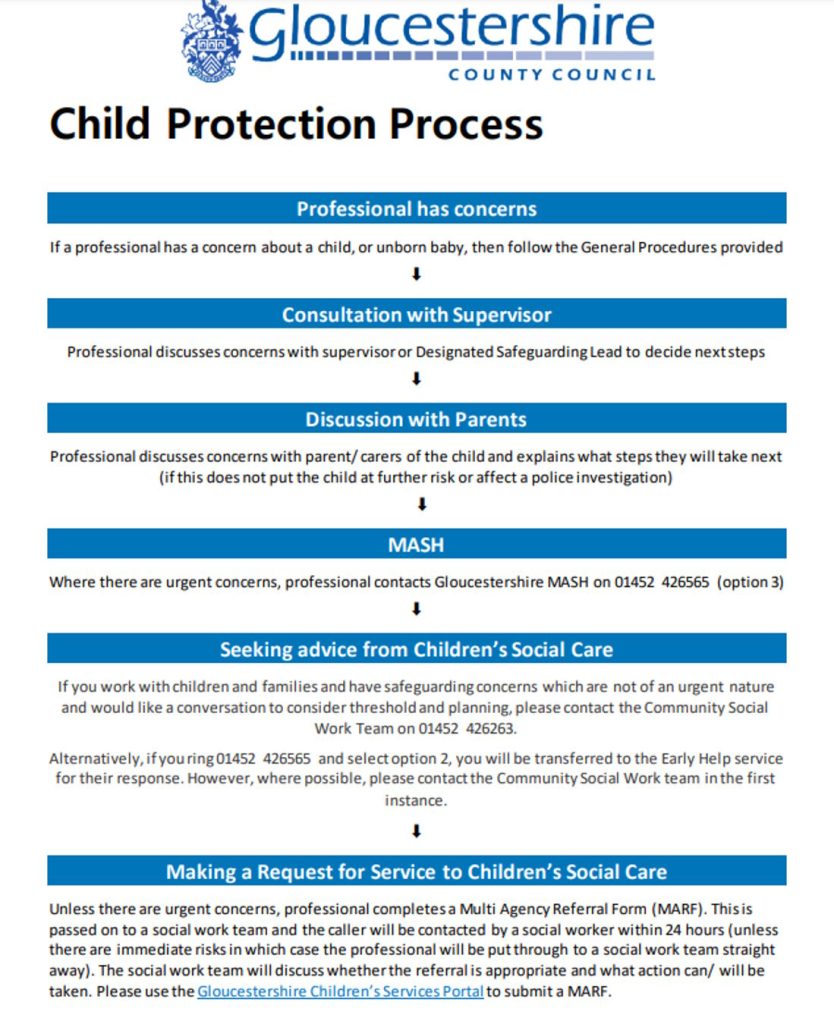
APPENDIX 4
ONLINE SAFETY AND MOBILE TECHNOLOGY
ONLINE SAFETY DEFINTIONS
• content: being exposed to illegal, inappropriate, or harmful content, for example: pornography, fake news, racism, misogyny, self-harm, suicide, anti-Semitism, radicalisation, and extremism.
• contact: being subjected to harmful online interaction with other users; for example: peer to peer pressure, commercial advertising and adults posing as children or young adults with the intention to groom or exploit them for sexual, criminal, financial or other purposes
• conduct: personal online behaviour that increases the likelihood of, or causes, harm; for example, making, sending, and receiving explicit images (e.g. consensual and non-consensual sharing of nudes and semi-nudes and/or pornography, this includes AI-generated, digitally altered, deepfake or synthetic sexual images and videos, and online bullying; and
• commerce – risks such as online gambling, inappropriate advertising, phishing and or financial scams. If you feel your students or staff are at risk, please report it to the Anti-Phishing Working Group (https://apwg.org/).
USE OF MOBILE TECHNOLOGY
Our intention is to provide an environment reducing the following concerns:
• Staff being distracted from their work with students
• The inappropriate use of mobile phone cameras, smart watches, cameras, and videos
• Inappropriate use of mobile phones and cameras around the students.
MOBILE PHONES
We recognise that staff, parent/carers, visitors, and contractors accessing our premises will be in possession of a mobile phone device and have the following procedures in place to minimise any risk of to the welfare and safety of our students.
• Staff, volunteers or outside professionals working directly with students must not access mobile phones in areas in which students are present.
• Mobile phones must be stored in staff lockers unless staff have express permission from a line manager to have them out whilst on duty.
• During the induction period to St Rose’s, it is explained all staff, volunteers, and contractors that the use of a mobile phone is not allowed at any time and is only permitted during their breaks in areas which are not being accessed by students.
• Photographic images and video’s may only be taken on school owned devices. Staff must not use their own mobile phone to take images or video’s.
• The school main telephone number can be used for emergencies by staff or volunteers or by people who need to contact them.
• In circumstances such as outings and off-site visits, staff will agree with their manager the use of personal mobile phones in the event of an emergency.
• It is the responsibility of all members of staff to be vigilant and report any concerns.
• Where there is a suspicion that the material on a mobile phone may be unsuitable and may constitute evidence relating to a criminal offence, the allegation process will be followed in line with our safeguarding policies and procedures
• Under no circumstances does St Rose’s allow a member of staff to contact a current student or parent/carer using their personal mobile telephone or other such device.
• During group outings nominated staff will have access to the setting’s nominated mobile phone (without a camera), which is to be used for emergency purposes only. Staff should not use their own mobile phones when they go on trips without express permission from their line manager.
Staff, students, contractors, and volunteers remain responsible for their own property and will bear the responsibility of any losses
SMART WATCHES
St Rose’s recognise there are many health benefits for the use of smart watches such as counting steps and heart rate.
To ensure the safe wearing of Smart Watches staff must:
• Ensure the watch is worn in ‘flight mode’ or Bluetooth is disconnected, this will ensure there is no internet connectivity to access notifications or Wi-Fi.
• Understand they may not use their watch to receive calls or check messages whilst working directly with students as this creates distraction and potential dangers.
• Be vigilant of others checking their watches and remind them of St Rose’s policy and procedures around the safe wearing of a smart watch.
• Not use their Smart Watch to access photos or images unless on a break and in an area away from students. Staff must not access photos or images whilst on local trips/outings.
Where ongoing technology advances, St Rose’s reserves the rights to request the removal of a Smart Watch if the safety of a student is at risk.
DIGITAL CAMERAS AND RECORDING EQUIPMENT
It is our intention to provide a safe environment and prevent:
• The possible identification of students when a photograph is accompanied by personal information.
• The inappropriate use, adaptation or copying of images for use on child pornography websites.
• The taking of inappropriate photographs or recorded images of students.
• The breach of conduct orders restricting photography of specific students.
PROCEDURES REGARDING DIGITAL CAMERAS AND RECORDING EQUIPMENT
An essential way to support and record a child’s development and engage parents/carers with the learning of their child is using photographs and via use of the online learning journal Tapestry. All parents are requested to sign a consent form on admission to St Rose’s for images to be taken and are asked for additional consent for their child to be included on Tapestry.
• Only school owned cameras/iPads are to be used to take images of the students either on the premises or on outings.
• Images taken should ideally be downloaded to Tapestry or the Media server within one week and then Tapestry or the Media server within one week and then deleted from the device every term.
• Photographs taken for the purpose of staff / student studies, outside agencies or promotional material will require consent by the student’s parent/carer
• Images taken on the camera must not put students in any compromising positions that could cause embarrassment or distress. Students should also be suitably dressed.
• Under no circumstances must a camera of any kind be used in the bathroom or changing areas.
• Staff must not take photographs of bruising or injuries on a child for child protection concerns. In these cases, a Body Map on CPOMS must be used.
• All staff members are responsible for the location of the cameras and image recording devices, and these should be placed within a lockable cabinet or office when not in use.
• If the school uses professional photographers for individual and group pictures, consent from parent/carers is requested prior to the photographic session. Photographers are to be treated as any other visitor on the premises and as such appropriate levels of supervision will be in place at all times.
• Parent/Carers/Families are not permitted to take photograph’s/videos of their child when attending school events i.e. sports day, Christmas concerts without express permission from the Principal. In the case of a school event or production where parents are permitted to take photos of their own students, they are strongly advised against the publication of any photos on a personal social networking site.
• Parents / Carers are requested not to post any images of other students without prior consent on social networking sites, but St Rose’s cannot be held responsible for any Parent/Carer sharing of images when attending events in which theirs and other students are taking part.
THERAPY STAFF PROCEDURES FOR PHOTOGRAPHY OF STUDENTS.
Guidance for therapists taking photos of students for therapeutic purposes.
As part of students’ therapy programmes St Rose’s and St Martin’s, physiotherapists, occupational therapists, or massage therapists may need to photograph students who have some of their clothing removed. This may be for the purpose of assessing posture, monitoring deterioration, monitoring progression of healing or to provide imaging to external professionals to identify, record and resolve issues caused by equipment such as injury or pressure areas.
In order to keep our students and staff safe the following procedures are in place: –
• Written parental consent must be obtained for images to be taken of children and shared with external agencies. Appropriate consent must be obtained and recorded for adults.
• Photographs taken for the above purposes may only be taken on school/ college owned cameras. Mobile technology with internet capability such as iPads (even if school/ college owned) must not be used.
• Staff must not use their own mobile phone to take images or videos.
• It is the responsibility of all members of staff to be vigilant and report any concerns.
• Images must be downloaded to the school server within one week and deleted from the camera.
• Images must be stored in the students’ Therapy folder and must not be saved or stored anywhere else on the school computer system.
• Images taken on the camera must not put students in any positions that could cause embarrassment or distress.
• Two members of staff must be present if images are being taken (in a changing area) where a student is undressed.
• Student’s dignity must be maintained at all times and photographs must not include anything that could identify a student outside of St Rose’s.
• Staff must only photograph bruising, injuries or pressure areas caused by equipment and not for any other reason.
• If images are to be shared with outside agencies, this must be done via secure email only.
• All staff members are responsible for the location of the cameras, and these should be placed within a lockable cabinet or office when not in use.
APPENDIX 5
EARLY YEARS INCLUDING RECEPTION AGE CHILDREN
LEGAL FRAMEWORK
As an early years provider delivering the Early Years Foundation Stage (EYFS), we are required to meet the specific safeguarding and child protection duties set out in the Childcare Act 2006 , the Early years foundation stage (EYFS) statutory framework – GOV.UK and other related statutory guidance
St Rose’s will ensure that children taught in nursery and reception classes are able to learn and develop and are kept safe and healthy so that they are ready for school by providing a safe, secure learning environment that safeguards and promotes their welfare, and takes appropriate action where there are child protection concerns.
SUITABLE PEOPLE
The school follows safer recruitment procedures to ensure all EYFS staff and volunteers are suitable to work with children and hold the required qualifications. No individual will undertake regulated activity, or have unsupervised contact with children, until all required suitability checks, including enhanced DBS and barred list checks where appropriate, have been completed.
All staff and volunteers receive appropriate induction, training and supervision and are expected to follow school policies and professional standards. Allegations against staff will be managed in accordance with school procedures and Ofsted will be notified where required. Staff must declare any medication that may affect their ability to care for children and follow the school’s medication procedures.
STAFF TRAINING, SKILLS AND SUPERVISION
We will ensure that:
• EYFS staff are appropriately qualified, skilled and trained in safeguarding and child protection.
• Staff receive regular supervision to discuss children’s development, wellbeing and safeguarding concerns.
• Staff can communicate effectively in English.
• A staff member with a current paediatric first aid qualification is available at all times and accompanies children on visits.
• Every child has a designated key person who works closely with parents/carers to support their development and wellbeing.
STAFFING AND SUPERVISION
We will ensure that:
• Staffing ratios comply with EYFS requirements.
• Children receive appropriate supervision and remain within staff sight or hearing at all times.
• Parents/carers are informed about staffing arrangements.
Health and Safety and Suitability of Premises
St Rose’s ensures that all indoor and outdoor EYFS environments are safe, suitable and regularly risk assessed, including off-site visits. Emergency contact details are kept up to date, and procedures are in place for the safe collection of children and the management of uncollected children.
ATTENDANCE
Although statutory attendance requirements apply from the term after a child turns five, regular attendance in the early years is important for children’s learning, wellbeing and safeguarding.
We will:
• maintain accurate daily attendance records;
• expect parents/carers to ensure regular attendance and promptly report absences;
• follow up unexplained or prolonged absences in line with safeguarding procedures;
• treat persistent or unexplained absence as a potential safeguarding concern and inform the DSL of concerning attendance patterns;
• make timely contact with parents/carers and, where necessary, use emergency contacts or refer to external agencies;
• support families through Family Help processes where barriers to attendance are identified; and
• promote positive attendance through partnership working with parents/carers and ongoing communication.
Staff are trained to recognise the impact of absence in early years and respond sensitively and appropriately to attendance concerns.
APPENDIX 6
THE PREVENT DUTY
Sheila Talwar (Principal) is St Rose’s Prevent Lead.
The aim of Prevent is to stop people becoming terrorists or supporting terrorism.
• Radicalisation is the process by which a person comes to legitimise support for, or use of, terrorist violence.
• Extremism is vocal or active opposition to fundamental British values, including democracy, the rule of law, individual liberty, and mutual respect and tolerance of different faiths and beliefs, including calls for the death of members of the armed forces.
• Terrorism is action which:
o endangers or causes serious violence to people;
o causes serious damage to property; or
o seriously interferes with or disrupts an electronic system.
The objectives of Prevent are to:
• tackle the ideological causes of terrorism;
• intervene early to support those susceptible to radicalisation; and
• enable those already engaged in terrorism to disengage and rehabilitate.
All schools are subject to the Prevent Duty under the Counter-Terrorism and Security Act 2015 and must have due regard to preventing people from being drawn into terrorism.
St Rose’s has no tolerance for extremist views from students, staff, governors or external individuals and organisations. We provide a safe environment where students can explore controversial issues appropriately and develop the knowledge, resilience and critical thinking skills needed to challenge extremist narratives. Extremism and radicalisation are safeguarding concerns and will be responded to in line with this policy.
Through our curriculum, including PSD, online safety and British Values education, we promote mutual respect, understanding, tolerance and peaceful conflict resolution. Where appropriate, students are taught about the risks associated with extremism and terrorism, including the police “Run, Hide, Tell” guidance.
We actively promote:
• democracy;
• the rule of law;
• individual liberty;
• mutual respect; and
• tolerance of those with different faiths and beliefs.
Protecting children from radicalisation forms part of our wider safeguarding responsibilities. Suitable filtering and monitoring systems are in place, and students are taught how to stay safe online at school and at home.
There is no single indicator that a child may be vulnerable to radicalisation. Staff will remain alert to changes in behaviour and other indicators, including:
• becoming intolerant of, or abusive towards, those who are different;
• increasing susceptibility to conspiracy theories or feelings of persecution;
• changes in friendship groups or appearance;
• rejecting previously enjoyed activities;
• isolating themselves from family or friends;
• speaking as though from a scripted narrative;
• unwillingness or inability to discuss their views;
• increased anger, disrespect towards others or secretive behaviour;
• accessing extremist material online;
• expressing sympathy for extremist ideologies or groups;
• possessing extremist literature; or
• contact with extremist recruiters or organisations.
Children vulnerable to radicalisation may also experience low self-esteem, bullying or discrimination. Staff should remember that these indicators may also be associated with normal adolescent behaviour and should seek advice where they have concerns.
All staff receive Prevent training. The Governing Body and Leadership Team maintain a Prevent Risk Assessment and Action Plan.
PREVENT: NOTICE, CHECK, SHARE
• Notice: Be alert to concerning changes in behaviour, online activity or associations that may indicate vulnerability to radicalisation.
• Check: Discuss concerns with the Prevent Lead, DSL or senior leader in line with school procedures.
• Share: Make an appropriate referral to Prevent, Children’s Social Care or other relevant agencies, including Channel where appropriate.
EXTERNAL AGENCIES AND SPEAKERS
St Rose’s will assess the suitability of external agencies and speakers to ensure that:
• messages are consistent with the school’s values and do not marginalise individuals or groups;
• input does not glorify criminality, violence or extremism;
• activities are appropriately planned within the curriculum;
• activities meet the needs of students;
• effectiveness is evaluated; and
• published or distributed materials are monitored by the Leadership and Management Team.
Where appropriate, external speakers may be used to support balanced discussion and informed debate. Through a broad and balanced curriculum, students are encouraged to develop resilience, critical thinking and an understanding of differing viewpoints.
IF YOU HAVE CONCERNS ABOUT EXTREMISM
Where a child is not at immediate risk of harm, staff should discuss concerns with the Prevent Lead, DSL or senior leader at the earliest opportunity. If the Prevent Lead is unavailable, this should not delay appropriate action. Referrals may be made directly to Children’s Social Care where necessary and the Prevent Lead informed as soon as practicable.
The Prevent Lead will assess the level of risk and determine the most appropriate referral pathway, which may include:
• Channel;
• Children’s Social Care; or
• other relevant safeguarding agencies.
For advice regarding extremism:
• Email: [email protected]
• Telephone: 020 7340 7264
• Contact Form: https://report-extremism.education.gov.uk
In an emergency call 999 or the Anti-Terrorist Hotline (0800 789 321) if:
• someone is in immediate danger;
• someone may be planning to travel to join an extremist group; or
• you see or hear something that may be related to terrorism.
Further guidance on Prevent referrals is available through the Gloucestershire Safeguarding Children Partnership website. For local advice contact:
• [email protected]
• [email protected]
Multi-Agency Contacts for Safeguarding in Education
If you have concerns about a child/young person in Gloucestershire:
|
If a child is at immediate risk call the POLICE |
POLICE 999 |
|
To make an URGENT referral to Children’s Social Care |
i.e., a child is likely to suffer or is suffering significant harm, call:- Gloucestershire MASH 01452 426565 option 3 for Safeguarding Concerns Levels of Intervention – levels-of-intervention.pdf |
|
To make a NON-URGENT referral to Children’s Social Care. |
Where Early Help/Family Help support is required please Contact children and family services | Gloucestershire County Council Professional Advice Line 01452 427070 (Monday to Friday 8.30am to 4.30pm) |
|
To raise concerns and ask for advice about radicalisation |
Gloucestershire Prevent Team – 01452 752604 |
|
To liaise with the specialist Safeguarding Police Unit |
|
Gloucestershire Safeguarding Education Partnership [email protected] |
Inclusion Advice Line General EIS Helpline 01452 427274 |
Critical Incident Support |
If you have concerns about a professional working with a child:
|
To raise concerns and ask for guidance in relation to the conduct of someone who works with children. |
Local Authority Designated Officer – (LADO) |
|
For information, advice, and guidance in relation to safeguarding policy and procedures: |
|
For advice and support in relation to Critical Incidents: |
|
Child sexual exploitation & child criminal exploitation |
|
|
Child Missing from Education |
|
|
Children affected by Forced Marriage |
Forced Marriage Unit |
|
Online Safety Advice |
Professional Online Safeguarding Helpline |
|
Reporting online sexual abuse and grooming |
Child Exploitation and Online Protection command |
|
FGM advice |
NSPCC FGM Helpline |
|
Domestic Abuse Helpline |
0808 2000 247 |
|
Young Carers – advice and support. |
|
|
CAMHS |
https://www.ghc.nhs.uk/our-teams-and-services/children-and-young-people/camhs/ |
|
Whistleblowing professional policy |
NSPCC Whistleblowing hotline |
|
Advice around harmful sexual behaviour. |
Gloucestershire Safeguarding Education Partnership – [email protected] Children’s Harmful Sexual Behaviour | Gloucestershire Safeguarding Children’s Partnership |